
Title: National Geographic Book of Nature Poetry
Edited by: J. Patrick Lewis
Major Themes: Poetry, Nature
Synopsis: A beautiful collection of nature poetry, interspersed with vivid, full-page photography.
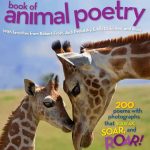
My sisters and I enjoy reading poetry together on some evenings, and one of the books we recently finished was the National Geographic Book of Nature Poetry. We read their book about animal poetry about a year ago, and loved that—the stunning pictures, combined with endearing and thoughtfully selected poems, made for a delightful reading experience. I didn’t appreciate all of the poems in that book; a few touched on topics I don’t agree with, but overall, I really appreciated that collection.
When it came to this book, we excitedly dove into it, expecting more great poetry. Unfortunately, that was not to be.
Publisher’s description:
When words in verse are paired with the awesomeness of nature, something magical happens! Beloved former U.S. Poet Laureate J. Patrick Lewis curates an exuberant poetic celebration of the natural world in this stellar collection of nature poems. From trickling streams to deafening thunderstorms to soaring mountains, discover majestic photography perfectly paired with contemporary (such as Billy Collins), classics (such as Robert Frost), and never-before-published works.
My thoughts:
One of the biggest things I enjoyed about this book—and the same thing I loved about the Animals book—was the photography. These pages brim with vivid color and life, drawing you into the action alongside the poetry. I love these pictures. They aren’t stylized in any way; they’re nature at its fullest and best, and that was delightful to me. I also love that there are notes with every picture, telling you what you’re looking at—and inviting further exploration into the topic, if you are so inclined.
Not everything was all hunky-dory, however. I don’t remember when I first started noticing it, but soon after we started the National Geographic Book of Nature Poetry, I realized that some of the poems had a weird mystical/spiritual element to them. It was subtle, and not in every poem, but there was enough that it started to almost feel like a pattern. As can be expected with the topic, there were semi-frequent allusions to evolution; since it was expected, that didn’t bother me much. But when you get into spiritualism other than worshipping, praising, and glorifying God for what He’s made, I struggle with that.
On the flip side, one thing I loved about this book was the way it introduced me to several places in the world that I never knew about before: The Great Blue Hole and Catatumbo Lightning, to name two of them. One of my sisters and I found those mentions so interesting that we took the time to look them up on YouTube after reading poems about those places. Another one that gripped my youngest sister’s imagination was the Christmas Island crabs—we enjoyed watching a couple of videos after reading about them, too.
Overall, while I wanted to love the National Geographic Book of Nature Poetry, and there were certainly several very lovable/educational elements, I came away from the book disappointed. Unfortunately, I don’t think this book will stay on our shelves, but I am thankful for the poems my sisters and I did get to enjoy together in this collection.
WARNING: Throughout the book, there are some allusions to evolution. Some of the poems also carry an element of mysticism in them, and many, many mentions of Mother Nature. Page 5: “Travel by photograph or on foot, but go quickly before nature disappears.” (While I agree that it’s sad that things are disappearing from the world, I didn’t like the implication that people are to blame when sin is the root issue.) Page 10: “I stand in good relation to the gods.” Page 35: And said that he’d kill and kill. Page 103: “Leaves browse on the sun like gods.” Page 123: A poem about global warming. Page 128: “The weather gods.” Page 145: Poem praising nature and ends with pledging allegiance to a place, “one ecosystem in diversity.” Page 152: Allusion to evolution. Page 155: “The gods conspire to produce.…” Page 157: Mention of millions of years. Page 159: “Men call me [Mount Everest] ‘Holy’ .” Page 162: Millions of years. Page 163: “All is one and one is all.” Page 167: Talking about Ayers Rock in a mystical sense. Page 175: Evolution. Page 177: Old Indian prayer. Page 180: “Who is Mother Nature?” (article about “her”).
Age levels:
Listening Level—Ages 3 – 4, 5 – 8, Family Friendly
Reading Independently—Ages 8 – 12, 10 – 12, 12 – 15
Links to buy this book:
Amazon: Hardcover
AbeBooks: View Choices on AbeBooks.com



Leave a Reply